Contrast & visual acuity
Dynamic range
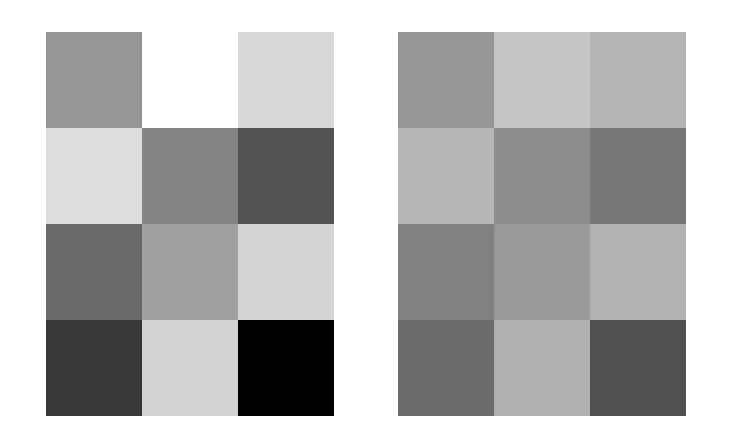
The difference between the lightest lights and darkest darks within an image or environment.
The visual system accommodates for changes in the dynamic range with contrast adaptation and light & dark adaptation.
How it affects UI design
Variance in dynamic ranges can affect contrast sensitivity and discrimination and causes legibility issues with text.
Supporting iOS increase contrast mode and Windows high contrast mode will help users in high or low dynamic range environments.
Consider personalization settings to give users the ability to adjust contrast and lightness. This will adapt the interface and better align with their sensory adaptations (contrast, light & dark) and variance in dynamic ranges.
Sources:
- Mark D. Fairchild (2013). Color Appearance Models. 3rd edition. John Wiley & Sons, Ltd. Pages 399-401
- Ana Radonjić, Sarah R. Allred, Alan L. Gilchrist, and David H. Brainard1. The Dynamic Range of Human Lightness Perception. https://www.ncbi.nlm.nih.gov/pmc/articles/PMC3244211/
- What is High Dynamic Range (HDR)? How Do HDR Cameras Work?. Edge AI + Vision Alliance. https://www.edge-ai-vision.com/2021/11/what-is-high-dynamic-range-hdr-how-do-hdr-cameras-work/
- Dynamic range. Wikipedia. https://en.wikipedia.org/wiki/Dynamic_range