Relationships
Warm & cool colors
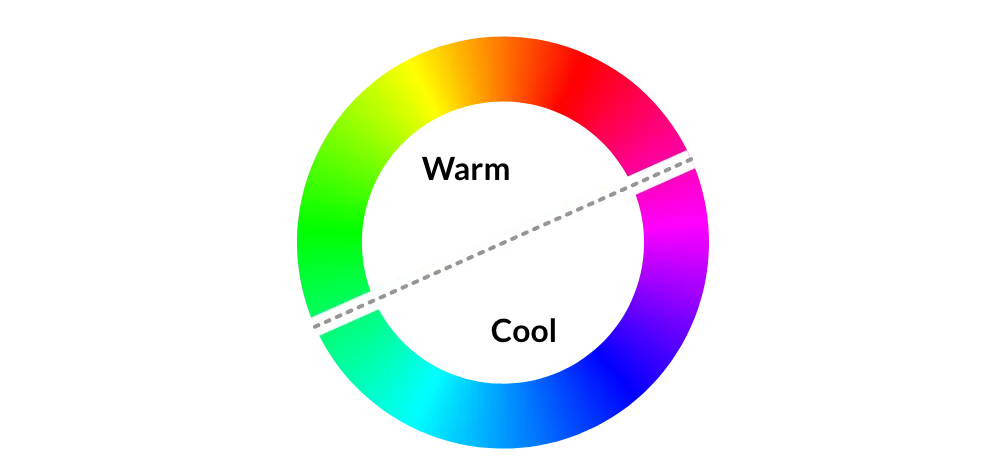
Color wheels are split into two sections: warm and cool colors. These are related to color temperature and are used to create dynamic color palettes.
Warm colors include certain greens, yellow, orange, and red. Cool colors include cyan, blue, purple, and fuchsia.
How it affects UI design
Complementary colors tend to be of opposing temperatures. Using warm and cool colors together creates dynamic color contrast.
Warm colors can communicate excitement, friendliness, and positivity.
Cool colors can be used to communicate calmness, peace, approachability, and sadness.
Certain combinations of warm and cool colors are not distinguishable to people with color vision deficiencies.
Related topics
Sources:
- Linda Holtzschue (2017). Understanding color: an introduction for designers. 5th edition. John Wiley & Sons, Inc. Pages 72
- Warm and Cool Colors: What They Are and How To Use Them. . https://www.colorsexplained.com/warm-and-cool-colors/
- Michael Townsend (2017). Defining Warm and Cool Colors: It's All Relative. . https://justpaint.org/defining-warm-and-cool-colors-its-all-relative/